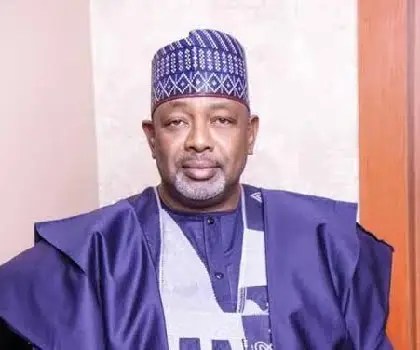
CONSENSUS BUILT FOR REFORM: TINUBU’S PLACE IN NIGERIA’S POLITICAL HISTORY

By Barrister Aminu Hussaini

History often reveals itself not in moments of noise, but in moments of alignment-when power, timing and leadership converge. Nigeria is living through such a moment and at its centre stands President Bola Ahmed Tinubu. The expanding national political consensus coalescing around the APC is not an accident of electoral arithmetic; it is the culmination of decades of political engineering, negotiations and strategic bridge-building in which Asiwaju has been the principal architect.
Nigeria’s recurring challenge has never been the absence of reform ideas. What has been missing is a leader capable of commanding sufficient national consensus to implement them. Constitutional conferences have come and gone. Committees have produced volumes of recommendations. Yet reform repeatedly stalled at the altar of political fragmentation and mutual suspicion. Tinubu’s ascendancy marks a departure from that cycle.
Unlike many leaders who inherit power without reach, Tinubu arrived at the presidency with a deep, cross-regional political network patiently built over time. His politics has always been coalition politics-pragmatic, inclusive and unsentimental.

From his days as a pro-democracy activist, to his tenure as Governor of Lagos State and through his role in forging the APC itself, Tinubu demonstrated a rare understanding of Nigeria’s power map and how to align its diverse interests without collapsing into sectionalism.

The current national convergence around the APC reflects this strategic depth. It is not merely that the party governs across much of the federation; it is that this spread cuts across traditional fault lines-North and South, Muslim and Christian, majority and minority regions. Only a leader with Tinubu’s political credibility and negotiating instinct could have held together such a broad coalition in Nigeria’s notoriously volatile political terrain.

This convergence creates something Nigeria has seldom enjoyed; the political space for courage. Restructuring- long caricatured as a sectional agenda- can now be approached as a national project.

Under Tinubu, the argument for reform no longer sounds like a threat to unity but like a strategy to save it. When a president commands trust and influence across regions, fears give way to dialogue and suspicion yields to pragmatism.
Nigeria’s problems are structural and well known. Over-centralisation has weakened security, stifled economic initiative and eroded accountability. States remain fiscally dependent and administratively constrained, while the federal centre is overburdened and inefficient. These dysfunctions persist not because they are unsolvable, but because previous leaders lacked the political alignment to confront them decisively.
Tinubu’s leadership changes that equation. His presidency coincides with a rare political consensus strong enough to sustain difficult conversations about devolution, fiscal federalism, state policing and a more balanced federation. Crucially, this is not consensus born of coercion, but of political inclusion. It is the product of alliances negotiated, interests balanced and egos managed – hallmarks of Tinubu’s political style.

With the groundwork of national consensus already laid, Kano’s decision to plug into the centre reflects a clear reading of history, power and opportunity. Given its demographic strength, economic reach and symbolic standing in the North, Kano’s cooperation significantly deepens the legitimacy and reach of ongoing reforms. More than a political gesture, the alignment positions the state as an active stakeholder in shaping outcomes rather than reacting to them.

At a time when reform demands coordination and shared purpose, Kano’s alignment enhances its influence at the centre while reinforcing national stability and policy coherence.
Yet history is unforgiving of missed opportunities.

Consensus can be a tool for reform or a trap of complacency. The measure of Tinubu’s place in Nigeria’s political history will not be the scale of his political dominance, but the depth of the reforms he dares to pursue. Power that merely consolidates itself is soon forgotten; power that restructures a nation endures.

Restructuring under Tinubu need not be radical rupture. It can be deliberate, negotiated and stabilizing – strengthening the federation by empowering its parts while preserving national cohesion. That balance between firmness and flexibility is precisely where Tinubu’s political genius has always resided.

This moment calls for statesmanship over partisanship, legacy over longevity. If Tinubu deploys this unprecedented national consensus to reset Nigeria’s federal architecture, history will remember him not merely as a master strategist, but as the leader who finally aligned Nigeria’s power structure with its realities. Moments like this define nations and leaders. For Bola Ahmed Tinubu, this is more than a presidency. It is an appointment with history!

Barrister Aminu Hussaini is the Special Adviser to the Governor of Kano State – AKY on Justice/Constitutional Matters: +234 8033742424 – aminuhussaini173@gmail.com

Yari Foundation to Organise Summits in Lagos, Enugu, Port Harcourt

The Yari Foundation has concluded arrangements to organise a series of high-level summits in Lagos, Enugu and Port Harcourt as part of efforts to promote peace, national development and inclusive dialogue across Nigeria.

According to the Foundation, the summits, scheduled to hold between January 19 and 23, will bring together key stakeholders from government, the private sector, civil society, academia and the media to deliberate on critical national issues. Key focus areas include economic growth, education, leadership, peacebuilding and social development.

A statement issued by the Foundation explained that the choice of Lagos, Enugu and Port Harcourt was deliberate, noting that the cities are major commercial, cultural and industrial hubs in the South-West, South-East and South-South geopolitical zones respectively.

The Foundation said hosting the summits across the regions would ensure broad participation while underscoring its commitment to national unity and balanced development.

The statement further disclosed that each summit would feature keynote addresses, panel discussions, interactive sessions and policy dialogues aimed at generating practical and sustainable solutions to challenges confronting the country.
Participants are expected to share ideas and experiences that would help strengthen institutions, promote an enabling environment for peace and enhance sustainable development at both national and grassroots levels.

While expressing optimism about the prospects of a peaceful and prosperous Nigeria, the Foundation said preparations for the events were at an advanced stage, adding that invitations would be extended to prominent Nigerians and relevant stakeholders across various sectors.

The Yari Foundation reiterated its commitment to initiatives that foster peace, dialogue, capacity building and socio-economic advancement, stressing that the forthcoming summits form part of its broader mandate to contribute meaningfully to Nigeria’s development and national cohesion.

It recalled that the Foundation successfully organised similar summits in Abuja, Kano and Jos last year, which attracted wide participation and positive reviews from stakeholders across the country.

ICPC’s Trial of El-Rufai’s Ally Commended by North West Group

A socio-political group in the North West, the Concerned North West Stakeholders Forum, has praised the Independent Corrupt Practices and Other Related Offences Commission (ICPC) for initiating the trial of Amadu Sule, a close associate of former Kaduna State Governor Nasir El-Rufai, over alleged corruption.

Sule, the Managing Director of TMDK Terminal Limited, is facing charges related to a ₦311 billion money laundering scheme. The ICPC arraigned him recently on accusations of abuse of office and diversion of public funds, charges that he has denied.

In a statement issued on Tuesday in Kaduna, the group’s Coordinator, Alhaji Musa Abdullahi, described the ongoing trial as a significant step toward strengthening accountability and upholding the rule of law in Nigeria.

“The ICPC’s decision to prosecute Sule, a known ally of the former governor, sends a clear message that no one is above the law,” the statement read. “This action will help restore public confidence in the country’s anti-corruption efforts.”

The group highlighted that Nigerians have long demanded greater transparency in the management of public resources, especially by political officeholders and their associates. It expressed hope that this trial would meet public expectations for a fair and impartial judicial process.

Furthermore, the forum urged the ICPC to maintain its commitment to ensuring that the case is rigorously pursued to its conclusion. “Selective justice would undermine the integrity of anti-corruption initiatives,” the statement added.

The Concerned North West Stakeholders Forum also called on other anti-graft agencies to follow the ICPC’s example and investigate corruption allegations against politically exposed individuals across the country. “Accountability is crucial for national development. Public office holders must remember that while power is transient, the law is constant,” the group emphasized.

While urging against any politicization of the case, the forum appealed to the judiciary to handle the trial with professionalism and independence, stressing the importance of justice for national stability.

The ICPC’s trial of Sule has drawn significant attention, as it is seen as a crucial test for Nigeria’s anti-corruption fight, especially involving prominent political figures and their associates.

Nigerian Farmers Appeal for Subsidy After Heavy Losses in 2025 Grains Production

By Our Correspondent

A group of 2,143 grain farmers in Kaduna State has appealed to the Federal Government for urgent intervention in the form of free or subsidised farm inputs, following losses estimated at N10.16 billion during the 2025 farming season.
The farmers, spread across the three senatorial districts of Kaduna State, said they were pushed to the brink by a sudden crash in maize prices nationwide, despite unprecedented increases in the cost of agricultural inputs.

Their plea was contained in a letter addressed to the Secretary to the Government of the Federation, the Minister of Agriculture, the Governor of the Central Bank of Nigeria (CBN), and the three Senators representing Kaduna state at the Senate.

The letter, written through their counsel, Barrister Ehizogie Fidelis Imadojemu, detailed how the farmers, operating under a maize farming scheme coordinated by Alhaji Rufai Muazu Dikko (popularly known as Sarkin Labar), were unable to recover production costs after harvest.

According to the farmers, the scheme, which began in 2017 with 1,000 hectares, has expanded to about 10,000 hectares cultivated by 2,143 farmers across Igabi, Soba, Kauru, Zaria and Sabon Gari local government areas.

Under the arrangement, Sarkin Labar provides capital, inputs and logistics, while farmers repay him in maize after harvest and sell the remainder for income.

However, the 2025 season proved disastrous. The farmers said a 50kg bag of NPK fertiliser sold for about N60,000, while urea rose to N50,000 per bag. As a result, the total cost of cultivating one hectare of maize climbed to over N2 million from  about N1 million for the preceding year.
With an average yield of 45 bags of 100kg per hectare, the farmers said each bag needed to sell for about N44,578 to break even. Instead, the prevailing market price crashed to about N22,000 per 100kg bag. This is less than half the required recovery price, resulting in a loss of N22,577 per bag.

From the total output of about 450,000 bags harvested across the 10,000 hectares, the farmers calculated an aggregate loss of over N10.16 billion.

“With these losses, the farmers cannot afford the cost of farming next season,” the letter stated, warning that the situation reflects the wider crisis facing maize farmers across Nigeria.

The farmers cautioned that unless urgent support is provided, many producers—particularly in northern Nigeria—may abandon farming in the 2026 season, a development they say could undermine the Bola Ahmed Tinubu administration’s food security agenda.

They are therefore requesting a bailout through the CBN in the form of free or heavily subsidised inputs such as fertiliser and urea for the 2026 farming season. In return, they proposed to reimburse the Federal Government with maize equivalent to part of the value of the inputs at the end of the season.
The farmers argued that such an intervention would stabilise grain production, boost food availability, and deliver political and economic dividends ahead of the 2027 general elections.
“Only by this arrangement will our clients and many other grain farmers around the country return to their farms in the 2026 farming season,” the letter said.
They also requested an urgent meeting with government officials, noting that preparations for the next planting season would soon begin.

Nigerians Should Back President Tinubu to Fulfill Energy Vision, Says Commission DG


Dr Mustapha Abdullahi, the Director General of Energy Commission of Nigeria (ECN) has applauded President Bola Ahmed Tinubu’s well thought out initiatives in the renewed Hope Agenda.

This initiatives, he said has touched and impacted positively on Nigerians and the nation.

In his New Year message to Nigerians, Dr. Mustapha Abdullahi said, “President Bola Ahmed Tinubu’s visionary Renewed Hope Agenda aims to reposition Nigeria and restore its glory and bring it back to its enviable position as country of destination to both local and international investors and the investment community, is gradually becoming the driving point for Nigerians seeking a better country and society.

“And, for President Tinubu, his well thought out plans to ensure that all Nigerians get access to renewable energy; sustainable energy supply to their homes and offices, birthed the reawakening of the Energy Commission of Nigeria, ECN which had been pushed to a near comatose state.

“His ambitious and unshaken belief in his policies is spearheading the transformative reforms and innovative initiatives to advance the nation’s energy transition. These efforts aim to unlock new opportunities for economic growth, sustainable development, and improved energy access for all Nigerians.

“As Chairman of the ECN, President Tinubu remains deeply committed to driving the Energy Transition Plan; a core component of his Renewed Hope Agenda. His leadership emphasizes the critical role of clean energy and strategic reforms in building resilient energy sector.

“This commitment is a firm exposition to Nigeria’s ambition to become a global leader in sustainable energy solutions while fostering economic progress and environmental stewardship.

“And, for this enviable and laudable project to become complete, Nigerians need to ensure that President Bola Ahmed Tinubu enjoy their total support to see this actualized.

APC Appoints Yusuf Dingyadi, 14 Others as Aides

Grace Adams


The All Progressives Congress (APC) has approved the appointment of Hon. Yusuf Dingyadi and 14 others as Special Advisers, Advisers and Senior Special Assistants to strengthen the party’s administrative and strategic capacity.
The approval was granted by the National Chairman of the All Progressives Congress, Prof. Netanwe Yilwatda, according to a statement issued by the party’s national secretariat on Tuesday.
The statement said the appointments are aimed at enhancing coordination, policy formulation and stakeholder engagement at the national level, adding that the aides are expected to leverage their experience and professionalism to support the party’s objectives.
Dingyadi was appointed as Senior Special Assistant on Media, barely a few months after resigning from the same position in the Peoples Democratic Party. The appointment is contained in the approved list of postings for Special Advisers and Senior Special Assistants sighted by Caliphate Radio.
A seasoned journalist, Dingyadi has extensive experience in the media industry, having served in various media-related capacities during his time with the PDP before his recent defection to the APC. His appointment is expected to strengthen the APC’s media and communication strategy at the national level.
Party stakeholders and media observers described the appointment as timely, expressing optimism that Dingyadi’s expertise will add value to the party’s public engagement and information management.
Other appointments include Special Advisers Senator Danladi Sankara on Political Matters, Daniel Oritsegbubemi on National Assembly Matters, and Dr. Sorochi Longdet on Research, Strategy and Planning.
Those named as Advisers are Jibrin Surajo on Community Engagement, Paul Domsing on Special Duties, Suleiman Bukari on Intelligence Coordination, and Prof. Taiwo Ajibolu Balofin as Honorary Adviser on Diaspora Coordination and Mobilisation.
Senior Special Assistants appointed to oversee operational areas include Imran Muhammad on New Media, Mildred Bako on Civil Society Organisations, Enenedu Idusuyi on Protocol, Ismaila Mohammed on Conflict Management, Zarah Onyinye on Media and Public Relations, Adaku Apugo on Inter-Governmental Relations, and Obinta Juliet Chinenye on Youth Mobilisation.

Amid Economic Hardship, Chibiri Residents Receive Yuletide Support from NGO

By victoria David

Omalife Rescue Foundation, a non-governmental organisation committed to poverty alleviation, child care and emergency relief, has distributed foodstuffs and clothing materials to residents of Chibiri community in Kuje Area Council of the Federal Capital Territory (FCT).

The intervention formed part of the foundation’s 2025 Annual Food and Clothes Fiesta, an outreach programme designed to support vulnerable families and ease the burden of rising economic hardship on low-income communities.

The event attracted a large turnout of beneficiaries, including women, children and the elderly, who received assorted food items and clothing materials to help meet their basic needs during the yuletide season.

Speaking at the occasion, the founder of Omalife Rescue Foundation, Dr Mrs Omanibe Sanusi, said the initiative was driven by compassion and a commitment to restoring hope and dignity to the less privileged in society.

She noted that poverty, hunger and inadequate care for children remain major challenges in many communities, stressing that the efforts of individuals and non-governmental organisations are critical in complementing government interventions.

According to her, the foundation has made the food and clothes fiesta an annual tradition as part of its broader mandate to provide emergency relief and promote human dignity among vulnerable populations.

Dr Sanusi explained that Chibiri community was selected for the 2025 outreach after an assessment revealed significant needs among residents, particularly widows, orphans and low-income households. She reaffirmed the foundation’s commitment to expanding its programmes in child welfare, skills support and rapid emergency response, adding that Omalife Rescue Foundation remains focused on achieving sustainable impact.

Community leaders in Chibiri expressed appreciation to the foundation for the gesture, describing it as timely and impactful in addressing immediate needs within the community.

In their remarks, the Chief of Chibiri, Chief Alhaji Ishaku Sakokwai, and the Onu of Igala Kuje, Chief Alhaji Hassan Khalid, who were physically present at the distribution, commended the foundation for considering their community and prayed for God’s blessings upon all those who contributed to making the outreach a success.

Some beneficiaries also lauded the organisers, saying the distribution would help cushion the effects of prevailing economic challenges and bring relief to many families.

The event was conducted in an orderly manner, with volunteers of the foundation coordinating the distribution process to ensure fairness and transparency.

Omalife Rescue Foundation stated that it would continue to partner with stakeholders and well-meaning Nigerians to reach more communities across the Federal Capital Territory and beyond, in line with its humanitarian objectives.

ENDS

NSCI Commends Defence Leadership Over Arrest of Bandit Kingpin Bako WurgiBy Mike Odeh JamesThe Northern Stakeholders Consultative Initiative (NSCI) has commended the Minister of Defence, Christopher Musa, and the Minister of State for Defence, Bello Matawalle, for their strategic collaboration which led to the arrest of notorious bandit kingpin and arms dealer, Bako Wurgi.In a statement issued in Abuja and signed by its Convener, Yerima Shettima, the group described the capture of Wurgi as a major breakthrough in Nigeria’s fight against banditry and terrorism, particularly in the North West region.NSCI noted that the successful operation reflects the growing effectiveness of intelligence-led and coordinated security efforts under the current defence leadership, stressing that the development has renewed public confidence in the capacity of the armed forces to restore peace and stability.According to the statement, General Musa’s leadership has strengthened military operations through improved intelligence gathering, inter-agency cooperation and community engagement, which have collectively weakened criminal networks operating across affected states.The group also acknowledged the role of Minister of State for Defence, Bello Matawalle, noting that his approach to security goes beyond military action to include socio-economic interventions aimed at addressing the root causes of banditry.“Matawalle’s emphasis on dialogue, alternative livelihoods and community inclusion has complemented kinetic operations, helping to reduce local support for criminal elements,” the statement said.NSCI described Bako Wurgi as a central figure in the banditry ecosystem, whose arrest is expected to disrupt arms supply chains and criminal coordination in the region. The group further noted that Wurgi’s reported links to other notorious bandit leaders underscore the importance of sustained pressure on criminal networks.The organisation called on the federal and state governments to continue providing adequate support, logistics and intelligence to security agencies to consolidate recent gains. It also urged citizens to cooperate with authorities by reporting suspicious activities.While celebrating the success, NSCI cautioned that the fight against insecurity remains ongoing, stressing the need for long-term strategies focused on education, economic empowerment and social cohesion to prevent the recruitment of vulnerable youths into criminal groups.“The capture of Bako Wurgi is a significant milestone, but it must be followed by sustained action and development-driven policies to achieve lasting peace,” the statement added.NSCI reaffirmed its commitment to supporting government efforts aimed at ending banditry and terrorism, expressing optimism that continued collaboration among security agencies, political leaders and communities would lead Nigeria towards greater peace and stability.ENDS

NSCI Commends Defence Leadership Over Arrest of Bandit Kingpin Bako Wurgi


By Mike Odeh James


The Northern Stakeholders Consultative Initiative (NSCI) has commended the Minister of Defence, Christopher Musa, and the Minister of State for Defence, Bello Matawalle, for their strategic collaboration which led to the arrest of notorious bandit kingpin and arms dealer, Bako Wurgi.
In a statement issued in Abuja and signed by its Convener, Yerima Shettima, the group described the capture of Wurgi as a major breakthrough in Nigeria’s fight against banditry and terrorism, particularly in the North West region.
NSCI noted that the successful operation reflects the growing effectiveness of intelligence-led and coordinated security efforts under the current defence leadership, stressing that the development has renewed public confidence in the capacity of the armed forces to restore peace and stability.
According to the statement, General Musa’s leadership has strengthened military operations through improved intelligence gathering, inter-agency cooperation and community engagement, which have collectively weakened criminal networks operating across affected states.
The group also acknowledged the role of Minister of State for Defence, Bello Matawalle, noting that his approach to security goes beyond military action to include socio-economic interventions aimed at addressing the root causes of banditry.
“Matawalle’s emphasis on dialogue, alternative livelihoods and community inclusion has complemented kinetic operations, helping to reduce local support for criminal elements,” the statement said.
NSCI described Bako Wurgi as a central figure in the banditry ecosystem, whose arrest is expected to disrupt arms supply chains and criminal coordination in the region. The group further noted that Wurgi’s reported links to other notorious bandit leaders underscore the importance of sustained pressure on criminal networks.
The organisation called on the federal and state governments to continue providing adequate support, logistics and intelligence to security agencies to consolidate recent gains. It also urged citizens to cooperate with authorities by reporting suspicious activities.
While celebrating the success, NSCI cautioned that the fight against insecurity remains ongoing, stressing the need for long-term strategies focused on education, economic empowerment and social cohesion to prevent the recruitment of vulnerable youths into criminal groups.
“The capture of Bako Wurgi is a significant milestone, but it must be followed by sustained action and development-driven policies to achieve lasting peace,” the statement added.
NSCI reaffirmed its commitment to supporting government efforts aimed at ending banditry and terrorism, expressing optimism that continued collaboration among security agencies, political leaders and communities would lead Nigeria towards greater peace and stability.
ENDS

KANO AND THE COST OF POLITICAL ISOLATION

Barrister Aminu Hussaini, in this piece, as his personal opinion, examined Kano’s political history, arguing that Kano, as a hub of economic activities in Northern Nigeria, and a Powerful political bloc in the region, must wake up and play politics not only with a passion but with pragmatism, purpose and strategic alignment with the centre that can deliver real results to its people.

Political analysts are of the view that, politics at its core, is not an exercise in sentiment or protest; it is a contest for power, influence and outcomes.

In every democratic system, numbers matter. Coalitions matter. Access matters. Today’s political reality in Nigeria is stark and undeniable: the All Progressives Congress (APC) controls 29 States, while all other parties combined govern just seven.

This imbalance is not cosmetic – it defines the flow of influence, federal attention and development opportunities. Kano State must therefore confront an uncomfortable but necessary truth: strategic alignment with the national majority is no longer optional; it is imperative.

Kano is not a peripheral state. It is Nigeria’s most politically significant Northern State by population, economic activity and historical influence. For decades, Kano has shaped national politics, produced national leaders and acted as a bellwether for political trends in the North. Yet, influence is not sustained by history alone. In modern governance, relevance is maintained by being at the table where decisions are made – not watching from the sidelines.

The federal system rewards cooperation, not isolation. States aligned with the centre enjoy smoother access to federal interventions, accelerated approvals for infrastructure projects, stronger representation in national policymaking and enhanced bargaining power within intergovernmental forums.

This is not a partisan fantasy; it is political reality, observable across administrations and parties since 1999. When a party dominates both the centre and the majority of States, internal party mechanisms-not opposition platforms – become the main arena where national priorities are negotiated.

Those arguing for political “independence” or “romantic opposition” must answer a simple question: what tangible benefits has political isolation delivered to Kano in recent years? Opposition politics may energize rallies and social media debates, but it rarely translates into handout roads, rail, power infrastructure, industrial clusters or sustained federal investments. Development is not awarded for moral positioning; it is negotiated through power structures.

Kano’s past offers sobering lessons about the price of strained federal relations. During the second republic, the state was governed by Muhammad Abubakar Rimi of the People’s Redemption Party (PRP); an ideologically driven but federally isolated administration. At the centre, the National Party of Nigeria (NPN) controlled federal power. The result was an unprecedented intervention: President Shehu Shagari appointed Lawal Kaita as presidential liaison officer in Kano, effectively supervising federal agencies in the state and asserting central authority over federal interests. This arrangement, widely seen as a response to Rimi’s confrontational posture, underscored how political estrangement can weaken a state’s bargaining power and invite federal encroachment rather than cooperation.

The lesson resurfaced decades later under Ibrahim Shekarau’s administration (2003–2011). Governing Kano while the PDP dominated the centre, Shekarau’s government often found itself outside the inner circles where federal priorities were shaped. While Kano did not grind to a halt, it increasingly lost momentum in attracting major federal projects and strategic appointments compared to states aligned with the ruling party. The absence of strong political synergy meant slower access to opportunities that flowed more easily to allied states.

In contemporary times, the pattern remains familiar.
The current Kano State administration has been marked by frequent friction with federal institutions, ranging from disputes with federal security agencies to open political hostilities with influential figures within the ruling establishment. These tensions have created an atmosphere of distrust and chaos, diverting energy from development-driven engagement and weakening Kano’s ability to negotiate effectively for federal investments, institutional support and national influence. These episodes are not coincidences; they reveal a consistent structural reality of Nigerian politics.

It is also important to dispel the myth that alignment equals surrender. Strategic alignment does not mean abandoning Kano’s identity, interests or bargaining power. On the contrary, Kano’s size and electoral weight make it a powerful bloc within any dominant political platform. Aligning with the majority offers Kano the opportunity to shape national policy from within, influence party direction and secure leadership positions that directly benefit the state’s long-term development agenda.

The numbers speak loudly. With 29 APC-governed states, national consensus within the ruling party effectively determines legislative priorities, budgetary focus and policy direction. Remaining outside this consensus does not make Kano principled; it makes Kano peripheral. In a country as competitive and resource-constrained as Nigeria, no serious state can afford such self-marginalization.

Kano’s political elite and stakeholders must therefore ask not what feels emotionally satisfying, but what delivers results. Roads, water projects, education funding, healthcare upgrades, security interventions and economic revitalization require federal-state synergy. That synergy is strongest when political alignment exists.

History favours those who read the moment correctly. Kano has never been a follower state-it has always been a strategic one. The present moment calls for pragmatism over posturing, realism over rhetoric and outcomes over outrage. Aligning with the national majority is not about party colors; it is about securing Kano’s rightful place in Nigeria’s future.

Politics is arithmetic before it is poetry. Today, the arithmetic is clear: 29 versus 7. Kano cannot afford to be sidelined-not in 2026; not in the years leading to the 2027 elections. The State’s political elite, business community, civil society and traditional institutions must prioritize strategic engagement with political majority at the centre. This is not to sacrifice local identity or autonomy-but to secure the tangible dividends of governance: infrastructure, jobs, investment, healthcare, education and security.

History has taught Kano painful lessons about the cost of opposing the centre without sufficient leverage. It is time to play politics not only with passion but with pragmatism, purpose and strategic alignment that delivers real results to the people. Kano must wake up, recalibrate and choose strategic relevance over symbolic resistance.

Barrister Aminu Hussaini Sagagi could be reached on- +234 8033742424, aminuhussaini173@gmail.com

Create your own website, free on WordPress.com.Create your own website.
Start free